Your menu is the only member of staff who works every single shift, talks to every single guest and never has a bad day. Most restaurants treat it as a price list. Designed properly, it can lift your average ticket by up to 15%.
It looks trivial. Put the dishes in order on a piece of paper, add prices and descriptions, done. What matters is that the food is good, right? No. The menu is the single most read document in your restaurant, and almost nobody designs it on purpose.
Here are ten rules we apply when we rebuild a menu, plus one bonus that most places forget until it is too late.
1. Decide who you are before you decide what goes on it
Before a single dish is listed, you need a clear brand. What kind of restaurant are you? Which moments of the day do you cover? What makes your offer different from the place across the street? Who is actually sitting at your tables?
A fast casual menu and a fine dining menu are not the same document, and that sounds obvious until you walk into a beautiful restaurant holding a menu that belongs in a roadside bar. The menu is where your positioning either becomes real or falls apart.
2. Organise the categories the way people order
A well organised menu is easy to read and lets guests find what they want fast. Group dishes into sections that make sense to the person reading, not to your kitchen: starters, mains, by type of dish, desserts, drinks, cocktails.
Be disciplined about how many sections you create. Every extra heading is another decision you are asking a guest to make, and a guest who cannot decide orders the cheapest thing on the page.
3. Write descriptions that sell, not inventories
A description is not a list of ingredients. It is the thirty words that make someone choose one dish over another. Name the origin when it matters, the technique when it is unusual, the texture when it is the point.
And keep it honest. A description that oversells is worse than no description at all: the dish arrives, it does not match, and you have turned a first visit into a last one.
4. Use photographs sparingly, or not at all
Photographs of food work in fast food and they work on delivery platforms. In a restaurant with any pretension, they lower the perceived price of everything around them. If you use them, use two or three, professionally shot, and never one per dish.
5. Build a pricing system, not a list of prices
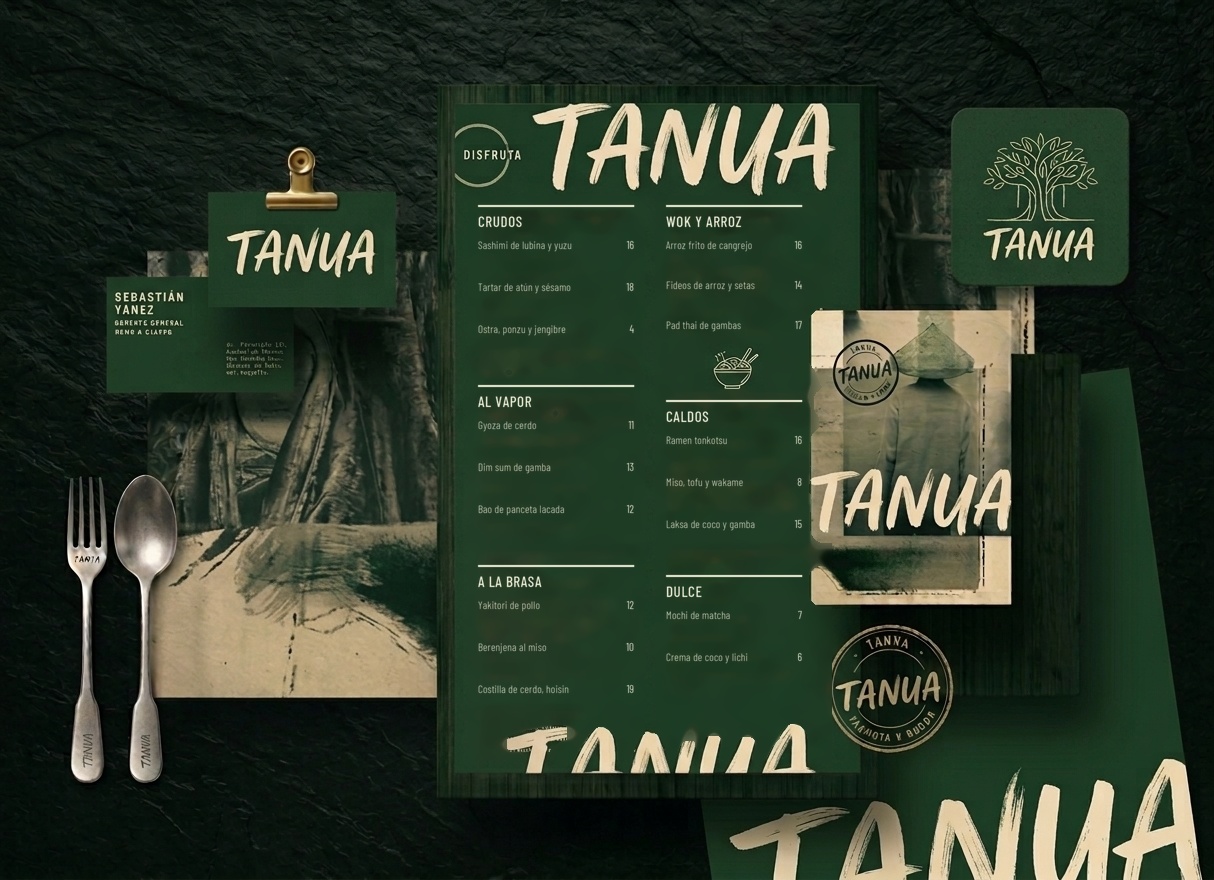
Prices should follow a logic that the guest can feel even if they cannot name it. Avoid stacking prices in a straight column down the right hand edge: it turns your menu into a spreadsheet and invites people to read it from cheapest to most expensive.
Drop the currency symbol, keep the number close to the dish, and make sure the spread between your cheapest and most expensive item in each section is deliberate. That spread is what anchors the choice.
6. Design it like a piece of your brand
Typography, spacing, paper and colour are doing the same job as your dining room and your uniforms. A menu set in a default font on a laminated sheet says something about your kitchen whether you meant it to or not.
7. Choose a material that survives service
A menu is handled dozens of times a day by people with wet hands and full glasses. Pick a material that still looks good in month six, and design it so a single change does not force you to reprint everything.
8. Design the QR version as its own thing
The digital menu is not a PDF of the printed one. It is read on a small screen, in bad light, by someone who is already hungry. It needs its own hierarchy, its own type sizes and its own order. A printed menu photographed and uploaded is the fastest way to lose the sale you had already won.
9. Take dietary requirements seriously
Allergens and dietary information are a legal obligation, but they are also a matter of basic hospitality: your guest needs enough information to make the right decision. Everyone knows the frustration of choosing badly, and a frustrated guest rarely gives you a second chance.
10. Change it on a schedule, not on a whim
Review and update the menu at least twice a year, to bring in seasonal produce, retire what is not working and follow how tastes are moving. A menu that never changes stops being a statement and becomes a habit.
Bonus: translate it properly
If you have international guests, translate the menu — and have it translated by someone who knows food, not by an automatic tool. A badly translated menu is funny once on social media and expensive every night after that.
A menu is not a price list. It is the most read piece of writing in your restaurant, and the only one that sells while you sleep.
Where to start
If you only do one thing from this list, do the first one. Every other decision — structure, wording, pricing, paper — follows from knowing exactly what kind of restaurant you are. Get that right and the menu almost writes itself. Get it wrong and no amount of typography will save it. The menu is the fastest margin lever you have, and that is menu engineering.