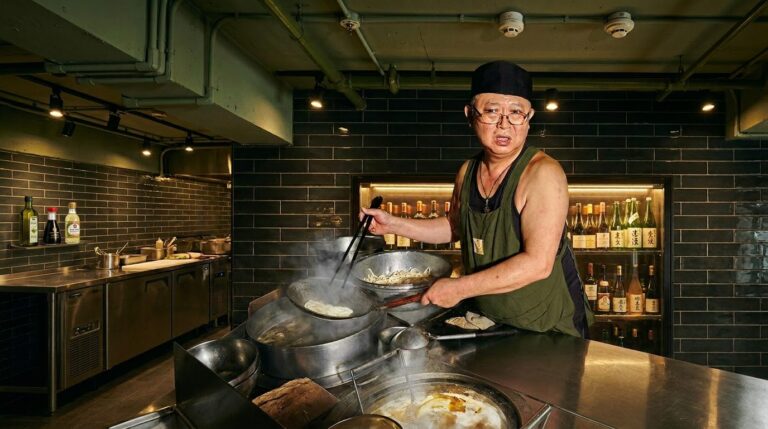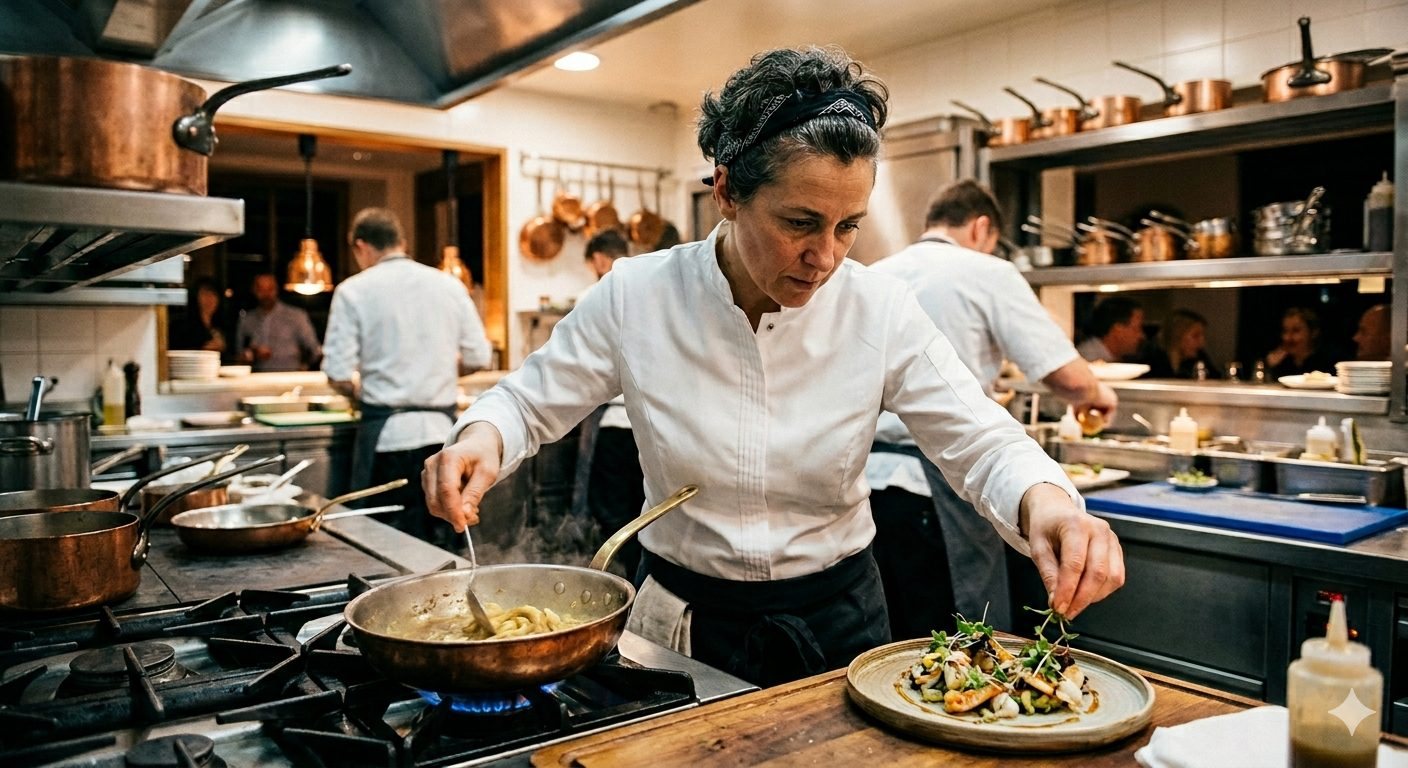
The additive-heavy veggie burger imitation is dead. Beyond Meat closed the fourth quarter of 2025 with revenue down 19.7% and the share trading below one dollar. Eleven Madison Park brought meat and fish back on 14 October 2025, after four years as the world’s only vegan three-star Michelin restaurant. The question is no longer how to replace meat. The question is plant cooking with an identity of its own.
01 — What is dying
Meat imitation has stopped working
Beyond Meat closed the fourth quarter of 2025 with revenue down 19.7%, gross margin collapsing from 13.1% to 2.3%, and the share trading below one dollar. Its share of assortment in US supermarkets has fallen 31% since 2021. What arrived as a revolution lasted seven years and is being dismantled with the public figures of a listed company.
And the most symbolic data point of the year: Eleven Madison Park — the world’s only vegan three-star Michelin restaurant — brought meat and fish back on 14 October 2025, after four years.
02 — What is growing
Plant-forward is not plant-based with a new label
The difference is worth pinning down, because the general press uses them as synonyms and they are not.
- Plant-based — the category that is sinking — is meat imitation, activism, ultra-processing and a high price. It is positioned as an alternative to something. The burger that imitates the texture of beef and tastes of chewing gum. The vegetable sausage with fifteen ingredients no customer recognises.
- Plant-forward — the category that is growing — is plant produce with its own identity, recognisable ingredients, no activism, positioned as a dish in its own right. The whole roasted cauliflower with technique. The artisan plant cheese. The pumpkin soup with miso and hazelnut. It imitates nothing. It is what it is. And it is delicious.
The growth figures are not arguable. Plant cheese +11% globally. Plant yoghurt +16.7% by volume in Spain. Oatly delivered its first quarter with a positive operating profit. Heura is billing with 26% growth.
The question is no longer how to replace meat. The question is plant cooking with an identity of its own.
03 — The Spanish customer who is coming
80% of Spaniards are already cutting back on meat
The figure that decides the menu for the next three years does not come from Wall Street. It comes from the Spanish consumer: 80% have reduced or are considering reducing their meat consumption. The main motivation is health (42%), not sustainability.
This is the operational key for the restaurateur: the customer cutting back on meat in 2028 is not a militant vegan. They do not want a separate section. They do not want a substitute that imitates the thing they are trying to eat less of. They want a good plant dish, positioned at the same level as any other dish on the menu, with no label and no prestige discount.
The menu that wins is the one that shows plant cooking as cooking, not as a concession.
04 — What I see when I audit
Three symptoms of an old plant-based menu
When I go in to audit a menu today, the symptoms that the plant section was built with the old logic are always the same:
- A list of three to five plant dishes grouped at the end of the menu, separated from the rest with a little leaf icon or similar.
- A price clearly below the equivalent meat dishes in portion and technique.
- Explicit imitation: veggie burger, veggie sausage, veggie meatball, veggie tuna.
If your menu has all three, you are telling the customer who eats less meat, or none, that their decision is worth less than the one made by whoever ordered the sirloin. And you are telling the sirloin customer that the other option is not worth it. You lose both along the way.
05 — For your restaurant
Five levers to rewrite the plant section
- Dissolve the plant section. Metric: number of plant dishes placed outside the «vegetarian options» section. Goal: zero segregated sections, plant dishes integrated into every part of the menu as dishes in their own right.
- Raise the price of the plant dish to the level of the equivalent meat dish. Metric: average ticket of the plant dish against the meat dish in the same section. If the plant dish systematically bills 30% less, you are communicating it as a by-product.
- Replace imitations with lead ingredients. Metric: number of plant dishes named after their main ingredient («whole roasted cauliflower», «smoked aubergine») against those named after an imitation («veggie burger»).
- Integrate quality plant cheese and dairy as product, not as substitute. Metric: presence of an artisan plant cheese on the cheese list alongside the dairy, not under «other options».
- Tell the technique in the dining room. Metric: percentage of customers who order the plant dish after it is described by the floor team.
The operator who understands by 2028 that the plant section is not a minority but a declared majority — 80% of the Spanish consumer is already there — will come out of the period with a menu aligned with their real customer and with today’s market.
Does your menu have a plant section, or does it have plant cooking integrated into it? At Eating Stories we rewrite the plant proposition of a menu without activism and without imitations, looking at what your customer is actually ordering and what your margin allows you to offer. Getting it onto the menu without breaking your costings is menu engineering.