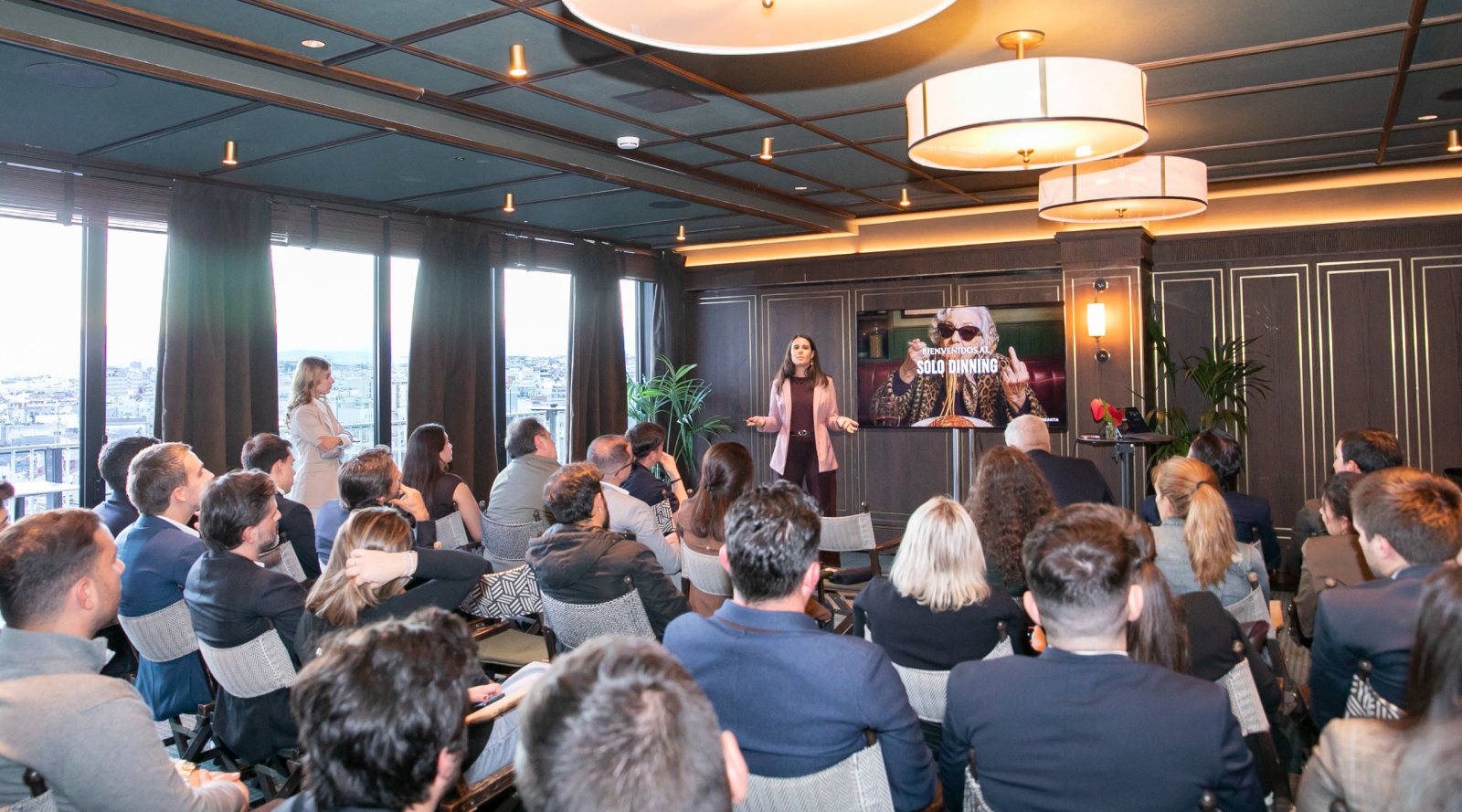
Last week Tania de Anta shared at the Zuplyit ThinkTank the six trends coming for hospitality between 2026 and 2028. Here they are — shorter, and with less charm than live.
01 — Zebra-striping
One with, one without, one with
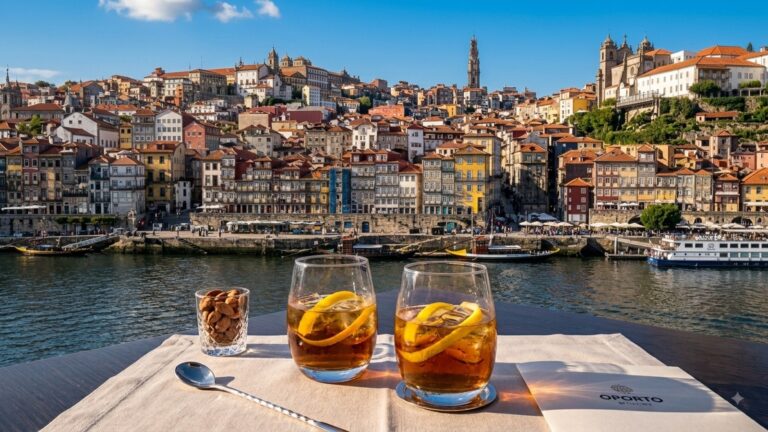
Diners drink less alcohol, but they do not want water. They consciously alternate drinks with and without alcohol within the same meal — to sleep better, to perform the next day, not to feel saturated. Not drinking stops being a sacrifice and becomes another way of ordering.
IWSR projects more than 4 billion dollars of incremental value in no and low alcohol by 2028. 74% of Gen Z still drinks, only three points below the adult average. Spain is the market in the world with the strongest base in alcohol-free beer: one in every seven beers consumed.
The opportunity is not in offering «one option without». It is in building zebra pairings — wine, mocktail, wine; beer, functional tonic, beer — and raising the mocktail to a category of its own.
02 — Solo dining
Eating alone is premium, not a discount
Bookings for one grew 19% worldwide in 2025 — the largest increase across all table sizes. Someone dining alone spends 54% more per ticket than the average. In the United States, 49% of millennials and 46% of Gen Z dine alone at least once a week.
And in parallel the other side of the phenomenon is growing: Timeleft, the app that brings strangers together for dinner, bills 18 million euros recurring with 150,000 monthly participants across more than 200 cities and 3 million users.
The solo customer is not a discount customer. They are premium. And the restaurant that receives them with judgement — a counter with a view, a good table, not the corner at the back — captures a margin the rest are leaving on the street.
03 — From plant-based to plant-forward
The plant proposition with an identity wins
Meat imitation is dying and plant cooking with its own identity is growing: recognisable ingredients, no activism, positioned as a dish in its own right rather than as a substitute for something else.
04 — Functional food
The menu is also a pharmacy
We no longer eat only to fill ourselves up. We eat to sleep better, perform more, concentrate, lower cortisol. Adaptogen drinks are up 18% year on year to 1.6 billion dollars. Searches for functional drinks in 2025: +14% on Google, +43% on TikTok, +171% on Instagram.
The giants are already in: PepsiCo bought Poppi in March 2025 for 1.95 billion dollars, Coca-Cola launched Simply Pop in February. And the crossover with zebra-striping is emphatic: in the United States in 2025 alcohol falls — beer 3.3%, spirits 4.1%, wine 6.1% — while functional non-alcoholic drinks rise 18.5% to 1.01 billion.
The ingredients to watch: ashwagandha, reishi, lion’s mane, rhodiola, magnesium and postbiotics. The basic rule for staying out of trouble: communicate the ingredient, do not promise a therapeutic effect.
05 — Middle East, regional Mexico and Africa
The Korean boom matures and three successors arrive
The Middle East goes first. Dubai awarded its first two three-star Michelin restaurants in May 2025 — Trèsind Studio and FZN by Björn Frantzén. Orfali Bros Bistro has been number one in MENA’s 50 Best three years running. Experts expect it to overtake the Asian cuisines as the dominant one within 12 to 18 months. Labneh, za’atar, harissa, pomegranate, pistachio.
Regional Mexico comes next: Oaxaca, Yucatán, Baja California, Puebla. Mexican cooking is already twinned with Spain — the opportunity is to go deeper into regions, not to introduce the generic. And our favourite: Africa. It enters through fine dining first — Ikoyi in London has held two Michelin stars since February 2022 with a focus on West Africa. Harissa, jollof rice, tagines and peri-peri are gaining traction among Gen Z and millennials.
06 — AI with judgement
The same thing will happen as with BI ten years ago
The sixth is the one that will most mark the difference between the group that survives these three years and the one that does not.
- The groups that win will have a department for process optimisation with AI. Not an intern poking at a chatbot — a team. Exactly as happened a decade ago with Business Intelligence: what first looked like a toy ended up being a vital organisational function. And that was not a thousandth of the game-changer that AI is.
- The skill that will be paid for dearly is not knowing how to use the tool. It is judgement. AI without judgement lies to you, and lies well. With judgement, it saves you months and a great deal of money. Whoever knows how to ask will win. Whoever copies and pastes will lose.
What unites the six
The six trends look different, and they are. But they all share one thread: the customer is not asking for less. They are asking for something different.
They are asking for a considered drink instead of a resigned one. For dinner alone without being treated as a punishment. For plant food with identity instead of plant food in disguise. For function in the coffee or the afternoon glass. For new cuisines that open a conversation. And, in operations, for judgement instead of tools.
The customer does not want less. They want different.
Each of the six will have its own post on this blog — some already do, others are coming in the next few weeks. If you want to think through how any of them fits your restaurant, write to me. This is the talk I take to congresses and to boards: keynotes.