Portugal has done what every centuries-old brand is chasing: a generation that would never have ordered port now orders it in August, on a terrace, drowned in ice. They did it without touching the wine. They touched the ritual — which is where the problem always was.
Set the scene. You own a product with four centuries of history, untouched critical prestige, more medals than shelf space, and one small problem: 80% of your sales land in the last three months of the year. Eighty percent. Your category doesn’t live off consumption. It lives off Christmas.
That is the number a marketing team in the port wine business puts on the table when explaining why they did something their own industry considered, literally, sacrilege: they added ice.
And yes, this is about Spanish hospitality too — where I work, and where half the cellar has exactly the same problem. Stay with me.
The day a K-pop idol did their market research for them
The story is too good to abbreviate.
One of the historic port houses had been growing in South Korea for a while. Good news — except nobody inside the company could explain why. Nothing they were doing there accounted for the curve. So they went to look at how their wine was actually being drunk in that market, which is the research almost nobody runs: not how much sells, but how it is consumed.
What they found: Koreans weren’t using the little glass. They were using big glasses, packed with ice.
Then came the revelation, on television. A singer from one of Korea’s biggest K-pop groups turned up on a talk show drinking their port. Not from a small stemmed glass after Christmas dinner. From a tall glass, full of ice, like someone having a soft drink on a Tuesday.
The question they asked internally is the best brand-strategy question I have heard this year:
Is this sacrilege, or is it the way forward?
It took them around three years to answer it. Three years of back-and-forth and cold feet. Because breaking your own codes is scarier than losing share — something I see in every repositioning project I work on.
The result: a port engineered for ice
In May 2026, the house of Kopke — founded in 1638, nearly four centuries ago — launched Kopke On Ice under the line «Time to break the ice». A white port formulated from scratch to survive dilution: the technical team told the Portuguese press they tuned density and concentration precisely so it would hold up over ice.
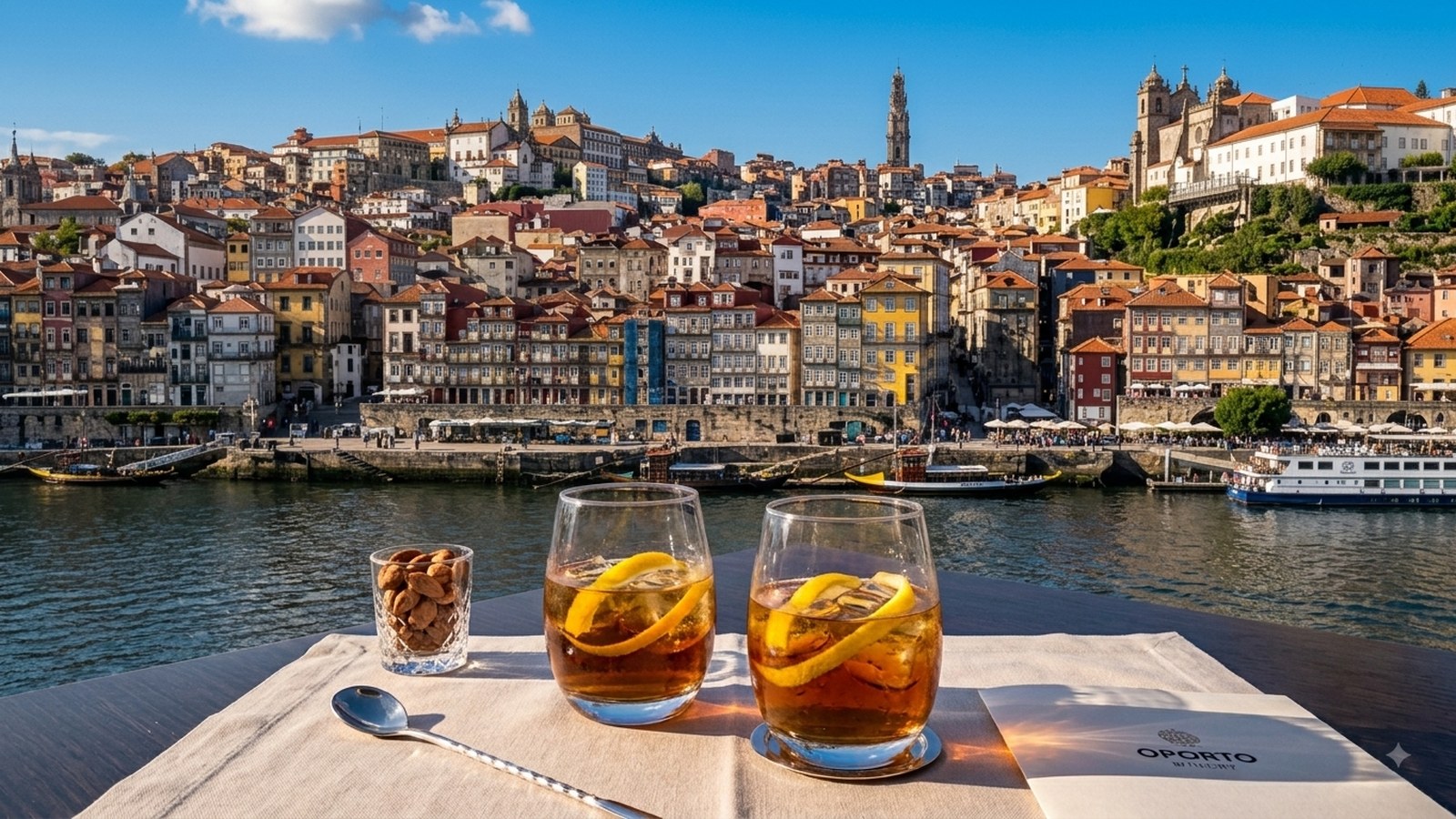
The serve: glass, plenty of ice, a twist of orange. That’s it.
Now look at the brand decision, which is the genuinely clever part: they launched it under their oldest brand. Not a youthful sub-brand, not a satellite launch designed to keep the flagship clean. The most venerable house in the category.
The logic is impeccable: the brand with nothing left to prove on quality is the only one with enough authority to commit the sacrilege. When you can sell a two-thousand-euro colheita, nobody assumes you are icing another bottle because the wine can’t stand on its own.
Translation for your business: permission to innovate doesn’t come from the new product. It comes from accumulated brand equity. Strong brand, you can break your own rules. Fragile brand, every break reads as a downgrade.
Port Tonic: the gateway product that changed everything
The ice didn’t appear from nowhere. It followed more than a decade of work on the Port Tonic — porto tónico, portonic, whatever you call it — which is the parent move behind all of this.
The recipe barely fills a line: one third dry white port, two thirds tonic, ice, a mint leaf. Done. The raw material had been sitting on the shelf for decades, too: dry white aperitif ports have existed in the category since the 1930s.
The new thing was never the liquid. It was the drinking occasion.
Does it work? Here is the figure I would put on a slide in any hospitality marketing class. On the terrace of one of Porto’s best-known wine-tourism venues, 67% of everything consumed is port wine — and of that 67%, 48% is cocktails.
Almost half the port drunk there arrives through the mixed-drink door. That is a textbook gateway product: the easy version doesn’t cannibalise the premium tier, it feeds it. You come in through the glass of ice; the old tawnies are waiting inside.
Deseasonalising demand: the KPI nobody tracks and everybody suffers
Back to that 80%.
«Demand deseasonalisation» is one of those phrases that sounds like an expensive MBA and actually describes the most common drama in hospitality: an excellent product that only sells inside a very narrow window.
In Spain it is the stew in January, the terrace in July, the group menu in December — and eleven months staring at the ceiling.
What the port industry did isn’t «sell more». It is manufacturing a consumption occasion that didn’t exist, without competing against the one they already owned. The full play:
- New anchor. Port Tonic doesn’t compete with the sweet wine of Christmas dinner. It competes with the gin and tonic and the Aperol Spritz — their price, their glass, their hour.
- New season. From winter and after-dinner to aperitivo and summer. Demand isn’t moved, it is added.
- Entry barrier demolished. Lower perceived strength, zero prior knowledge required, fifteen-second prep.
- Pyramid untouched. The four-figure colheitas stay exactly where they were. Premiumisation isn’t compromised.
The honest context: the category has fallen more than 30% since 2000. And yet Douro and Port wine sales closed 2024 at €624 million, up from €615 million in 2023.
Not a resurrection. Something more interesting: a category that has stopped falling while it redesigns how new people get in. For a heritage category, that is a serious win.
Millennials and Gen Z aren’t rejecting your product. They’re rejecting your toll.
This is the part I find most useful, and where I watch Spanish heritage brands slip most often.
When the port industry talks about opening up to new targets, it isn’t chasing twenty-two-year-olds. They say so themselves, refreshingly: the goal is to move the profile from forty down to early thirties, and win back people who currently reject the category as too strong, too sweet, too heavy.
That is adult targeting. Not dressing up as young — which is the mistake behind every excruciating rebrand where a centuries-old winery suddenly starts talking in TikTok slang and convinces nobody.
The underlying diagnosis is better still. The problem was never the taste: it was the cultural toll. To order a port you had to know whether you wanted ruby, tawny, LBV, vintage, white or rosé. You walk up to a bar, say «a port», and get handed an exam.
Millennials and Gen Z won’t pay that toll for a drink. It isn’t that they don’t want to learn — they want to learn after they like it, not before.
In fact, people inside the industry admit they would settle for visitors leaving a cellar knowing one single thing: what temperature port should be served at. Not grapes, not vintages, not the master blender. The temperature.
Hold your own menu up against that standard for a second.
The welcome drink Portugal hasn’t declared yet
One last note, straight out of the missed-opportunity handbook.
Tourists arriving in Portugal already expect Port Tonic to be the drink of the country. They assume it is the national serve. And the industry still isn’t putting it in front of them as easily as they expect it.
The comparison made from inside is exact: Aperol Spritz isn’t a drink, it is an aspiration. Italian dolce far niente served in a glass. Nobody orders a Spritz for its organoleptic profile; they order it for what holding one means.
Port Tonic has precisely the same symbolic potential: sunset over the Douro, in a glass.
When a category gets customers arriving already asking for its product and still doesn’t serve it well, the problem isn’t demand any more. It is floor execution and joint communication. Which — funny thing — is exactly what happens across half of Spain with its vermouths and its fortified classics.
What I’m taking into my own projects
There is one idea here that belongs on the wall of any brand consultancy working with heritage products: the codes and rituals exist and they matter — but reduce yourself to them and you kill the category.
I see it constantly. The ritual that once built the prestige ends up working as a locked door. The small glass. The after-dinner slot. The winter. The insider vocabulary. All defensible, all correct, all perfectly exclusionary.
Portugal didn’t change its wine. It changed the glass, the temperature and the hour. And it accepted something that is genuinely hard to accept when you have spent centuries doing something well: that the first time someone tries your product, it doesn’t have to look anything like the way an expert drinks it.
If your menu, your brand or your product has spent years waiting for a customer who knows how to appreciate it «properly», the uncomfortable question has already been asked from the banks of the Douro. And it still has no easy answer: sacrilege, or the way forward?
I know which side I would take. And it isn’t about the ice. It is something I also say from the stage: a tradition that does not design its next first time is not preserved — it fades.